Category: Writing

Discover tools, workflows, and insights that streamline processes, boost efficiency, and empower smarter, faster development cycles.

  • The Truth Is Good Enough

    The Truth Is Good Enough

    There was a time when I avoided the truth because I was afraid of rejection.

    If I did not want to do something, I softened my answer. I delayed it, bent it, or buried it beneath an explanation. I told myself I was protecting someone else’s feelings.

    Most of the time, I was protecting my need to be accepted.

    I had a similar problem with affirmations. Standing in front of a mirror and saying, “I am abundant,” felt dishonest when there was less than a dollar and a quarter in my bank account.

    I even kept a two-dollar bill tucked inside my wallet so I could tell myself I was never completely broke.

    The gesture made me smile, but it also revealed the problem. I was trying to replace an uncomfortable truth before I had admitted it.

    I was struggling financially.

    I was afraid.

    I wanted things to change.

    Those statements did not sound inspiring, but they were honest. Once I could say them, I no longer had to pretend that everything was fine before I could begin moving.

    Dr. Latrice often reminded me, “The truth is good enough.”

    It took time for me to understand what that meant.

    The truth did not require me to surrender hope. It gave hope something real to stand on. I could acknowledge where I was without deciding that I would remain there forever.

    The same thing happened with my relationships. When I did not want to do something, I began trying to say so. When I was afraid of disappointing someone, I admitted that too. When I wanted success, I stopped pretending that wanting it made me selfish.

    Honesty did not make every conversation comfortable. It did reduce the number of stories I had to maintain.

    I still care what people think. I still catch myself softening an answer when a direct one feels dangerous. The difference is that I can recognize what I am doing.

    Sometimes growth is not about adding another affirmation.

    Sometimes it begins by subtracting what is not true.

    Alignment Before Outcome

    I once believed alignment required me to sound confident before I felt confident.

    What I needed was a more honest starting point.

    “I am afraid” could be true without becoming a permanent identity. “I am struggling” could describe the moment without predicting the future. “I want more” could be an honest desire rather than something to hide.

    The truth did not make me fearless.

    It gave me something solid to stand on.


    “The truth did not make me fearless. It gave me something solid to stand on.”


    If this resonated, pull up a chair. I send one letter a month with new writing and honest updates on my novel, Paul’s Penance. Sign up at danhansen.com.

  • Gratitude Starts in the Mirror

    Gratitude Starts in the Mirror

    I was good at thanking other people.

    Teachers, mentors, doctors, family members, and even strangers had heard my appreciation. I could recognize what someone had given me and tell them it mattered.

    Then one morning, I realized I had thanked almost everyone except the man in the mirror.

    For years, I had avoided looking at him. It was not hatred exactly. It was discomfort. Encouraging someone else felt natural. Speaking gently to myself felt awkward.

    I decided to begin with one simple sentence.

    “Good morning. Have an amazing day.”

    That was it.

    There was no declaration of greatness. I did not have to convince my reflection that everything was wonderful. I was standing there with a toothbrush nearby, looking at the same face I usually hurried past.

    “Good morning. Have an amazing day.”

    It felt a little strange. Most unfamiliar kindness does.

    Still, I had acknowledged myself.

    As I practiced that small greeting, I began noticing the other quiet acknowledgments around me. A smile. Eye contact. A sincere thank-you. None of them required a grand gesture. They simply let another person know that, for one moment, they had been seen.

    I had offered that recognition to other people while withholding it from myself.

    Gratitude did not suddenly make my life perfect. It did not erase the parts of me I was still learning to accept. Something softened, though. I was no longer beginning each day by looking away.

    Sometimes the person who most needs my kindness is the one brushing his teeth.

    Alignment Before Outcome

    I once treated gratitude as something that traveled outward.

    Turning it toward myself felt uncomfortable because I confused appreciation with approval. I thought I needed to become someone better before I could acknowledge the person already standing there.

    The mirror did not ask me to approve of everything.

    It only gave me a place to begin seeing myself again.


    “The mirror is not an enemy. It’s a meeting place.”


    If this resonated, pull up a chair. I send one letter a month with new writing and honest updates on my novel, Paul’s Penance. Sign up at danhansen.com.
  • The Power of Letting Go

    The Power of Letting Go

    Nine years.

    That is how long it took me to understand what I could not accept when my marriage ended.

    I had internalized my vows so completely that divorce felt like an amputation. I was not only grieving a relationship. I was grieving an identity and the future I thought had already been decided.

    For years, I carried the ending as proof that I had failed.

    I believed holding on demonstrated loyalty. I confused suffering with devotion. If I continued carrying the pain, perhaps it meant the marriage had mattered.

    It had mattered. Holding on was not what made that true.

    Around that time, I encountered the idea that the number nine represents completion and new beginnings. I do not know what numerology can prove, but the metaphor stayed with me. The shape of nine resembles a spiral. An ending does not have to become a wall. It can become part of something that continues outward.

    The year was 2025, nine years after my divorce. The digits in the year also added up to nine. Maybe that was coincidence. Maybe I was finally ready to notice.

    What mattered was that I stopped arguing with what had already happened.

    The marriage had ended. My former wife had made her decision, and I had played my own part in what brought us there. Acceptance did not require me to make either of us the villain.

    Forgiveness began when I stopped deciding who deserved the blame and stopped using the past to punish myself.

    Letting go did not excuse anything. It did not rewrite the marriage or erase what it meant to me. It released the pressure I had placed on its ending.

    For the first time in years, I felt space where anguish had lived.

    Alignment Before Outcome

    I once believed acceptance meant admitting that the relationship had not mattered.

    Instead, acceptance allowed me to honor what had been real without demanding that it remain unchanged.

    I could remember the past without asking it to become my future.

    That was not defeat.

    It was room to continue.


    “Endings are not walls. They are spirals.”


    If this resonated, pull up a chair. I send one letter a month with new writing and honest updates on my novel, Paul’s Penance. Sign up at danhansen.com.
  • Redefining Surrender

    Redefining Surrender

    This morning, I made a decision I had already made a long time ago.

    I’m going to my class reunion.

    I’m not entirely sure why I’m looking forward to it. That uncertainty is part of what feels right.

    I’m not going to prove anything. I’m not trying to recover the past or show anyone how my life turned out. I simply want to go.

    It feels like I’m showing up to life again, curious instead of guarded.

    Another small choice followed. I didn’t go back to bed. I sat down to write instead.

    It wasn’t a dramatic act of discipline. No music swelled in the background. I just sat down.

    Still, the choice mattered.

    Rest would have been easier. Some mornings, it may have been the right choice. But this morning, I knew the difference between resting and withdrawing. Sitting down meant I was willing to meet what was in front of me.

    Both decisions revealed the same change.

    I’m beginning to understand surrender differently.

    For most of my life, surrender felt like losing. It meant giving up ground, accepting defeat, or admitting I wasn’t strong enough to keep fighting. I thought letting go meant something was being taken from me.

    Now I wonder how much of that fighting was never against fate, bad luck, or anyone else.

    Maybe I was fighting reality.

    I mistook rigidity for strength. I held on because holding on felt responsible. Meanwhile, the effort showed up as tension in my body, dissonance in my choices, and delays I couldn’t understand.

    Letting go didn’t remove my responsibility.

    It changed my relationship with it.

    Surrender became less about giving something up and more about yielding to what I already knew. Go to the reunion. Sit down at the desk. Let the next honest movement be enough.

    Nothing was being taken from me.

    I was being invited back into my own life.

    Alignment Before Outcome

    I used to believe surrender came after every other option had failed.

    Now I see it as cooperation with what is already trying to move.

    The timing wasn’t wrong. I wasn’t broken. I was learning the difference between forcing my life and participating in it.

    Even readiness arrives in its own time.


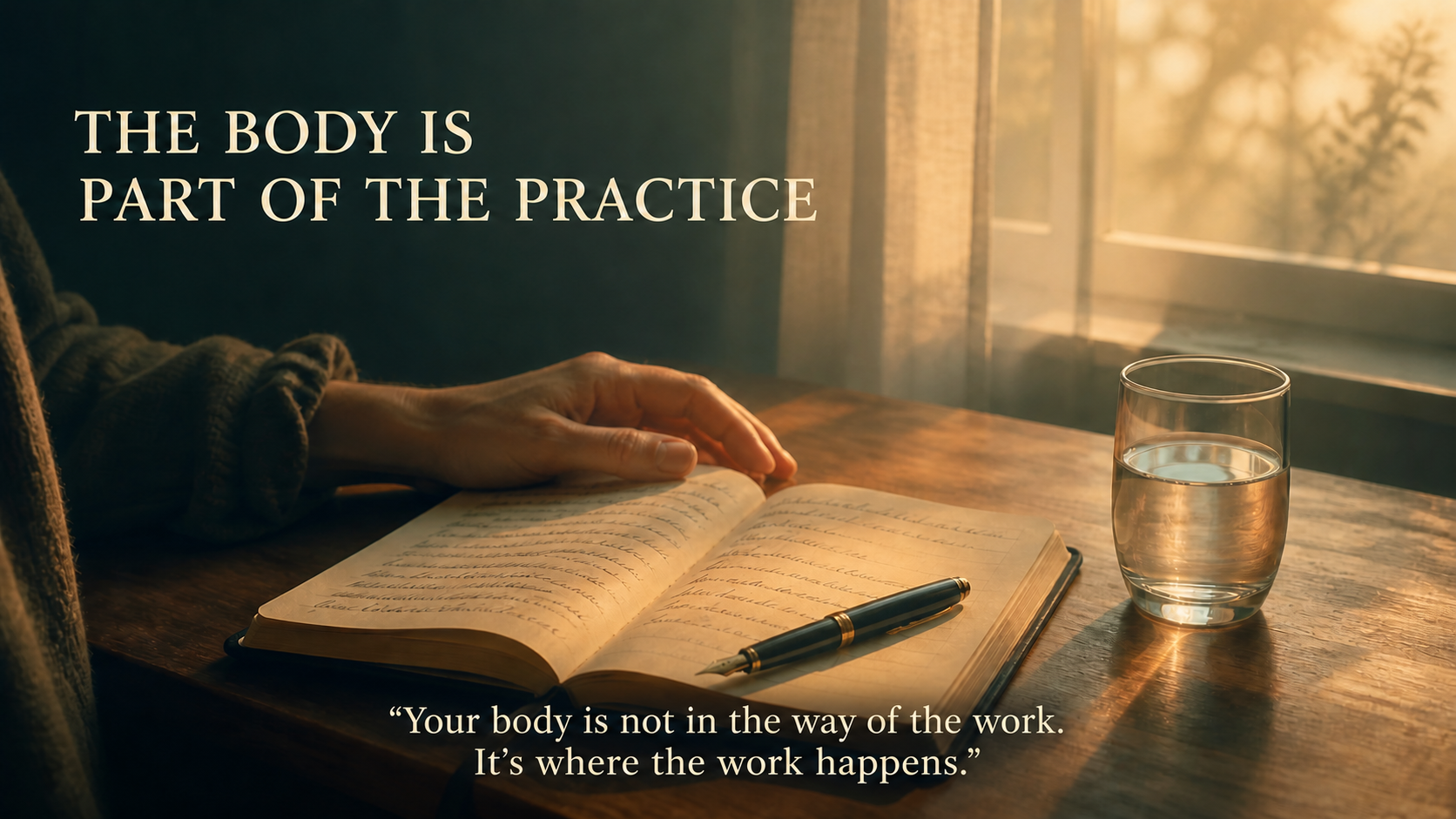
    “Surrender wasn’t losing. It was finally yielding.”


    If this resonated, pull up a chair. I send one letter a month with new writing and honest updates on my novel, Paul’s Penance. Sign up at danhansen.com.
  • The Body Is Part of the Practice

    The Body Is Part of the Practice

    By the seventh week of returning to Morning Pages, the ritual had become familiar.

    That morning was harder than most. My head felt foggy. I had only consumed one beer, but my body noticed it anyway.

    At least my handwriting was easier to read.

    “So what are we doing this morning?” I asked.

    The answer came calmly.

    Start with an outline. Clear your head. For some writers, alcohol might be fine. For what you are doing now, it is not.

    No judgment. Just clarity.

    “Hydrate first,” the voice said. “Then we’ll work. And clean up a bit.”

    It struck me how practical the guidance had become. Not mystical. Not lofty. Just attentive.
    Your body is part of this, the voice reminded me. Treat it like the place where the work happens.

    I thought about how easily I could ignore what my body was carrying. Sugar. Weight. Habits that accumulated quietly over a lifetime. My body had carried me through more than I had ever acknowledged.

    Cancer made it impossible to pretend that my body was separate from the rest of my life. Healing was not separate either.

    This was not about blame. It was about responsibility, the kind that grows from care instead of fear.

    If I was going to surrender to the process, I had to include my body in that surrender.
    Writing did not happen in spite of my body.

    Writing happened through it.

    So I drank some water. I cleaned the space. I sat down again.

    The work continued.

    Alignment Before Outcome

    Clarity is often treated as a mental problem when it may be a physical request.

    What might change if you listened to your body not as something to manage or correct, but as part of the practice itself?

    You do not need to perfect anything today.
    You only need to care for what is already carrying you.

    That is alignment.
    The outcome can wait.


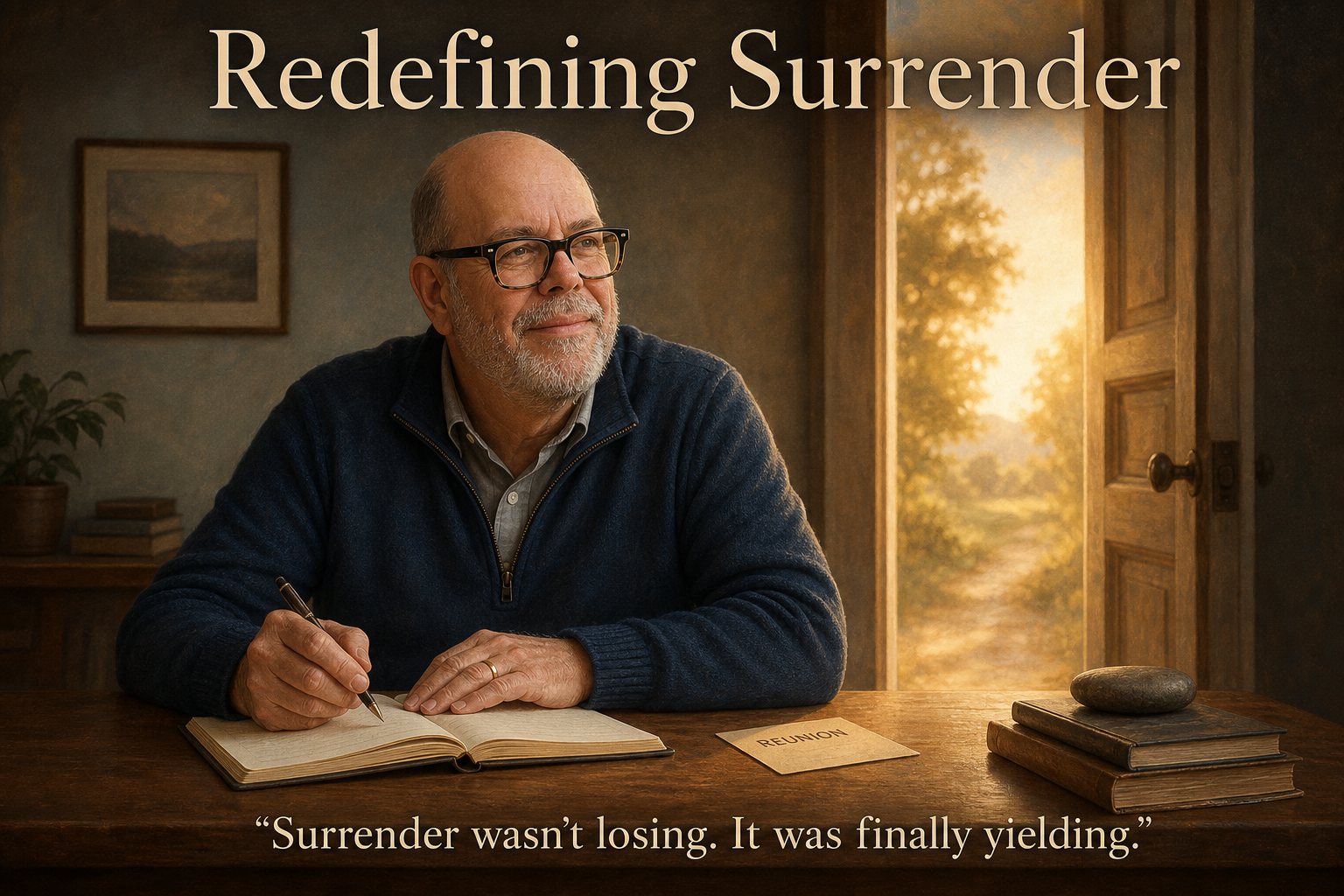
    “Your body is not in the way of the work. It is where the work happens.”


    If this resonated, pull up a chair. I send one letter a month with new writing and honest updates on my novel, Paul’s Penance. Sign up at danhansen.com.

  • Keep It So Simple

    Keep It So Simple

    We have a way of making growth harder than it needs to be.

    There’s an old acronym: K.I.S.S. I learned it as “Keep It Simple, Stupid.”

    I never liked that version.

    After years of being told I wasn’t smart enough, I didn’t need another phrase that used shame as motivation. I had already spent too much of my life believing intelligence had to be proven.

    Complicated sounded smart.

    Simple sounded like I hadn’t tried hard enough.

    I see that differently now.

    Complexity isn’t proof of intelligence. Sometimes the clearest sign that I understand something is that I can stop hiding it behind extra words, elaborate systems, or unnecessary steps.

    So I’ve given K.I.S.S. a new meaning:

    Keep It So Simple.

    When I started Morning Pages, three full pages felt overwhelming. The number became another measurement I could fail to reach.

    But the value was never hiding in the number three.

    It was in returning to the page.

    For one person, that return may take three pages. For another, it may begin with three minutes. The practice doesn’t become meaningful because it is intense. It becomes meaningful because there is a way back to it tomorrow.

    I’ve noticed the same thing in prayer.

    My prayers don’t always need ceremony or polished language. Sometimes I greet the presence I have come to know. I say thank you. I ask what I need to ask.

    Then I listen.

    Even surrender has become simpler.

    I once thought surrender required a dramatic defeat. Now it feels more like allowing. I loosen my grip on the outcome and make room for what is already trying to emerge.

    Write.

    Pray.

    Surrender.

    Not as a formula for anyone else. Just as three simple movements that help me return to myself.

    I don’t need to master everything before I begin.

    I need to make the next honest practice simple enough that I can keep meeting it.

    Alignment Before Outcome

    I used to make things complicated because complexity made the work feel important.

    Now I’m learning that simplicity doesn’t make a practice smaller. It removes what keeps me from returning to it.

    Consistency loves simplicity.


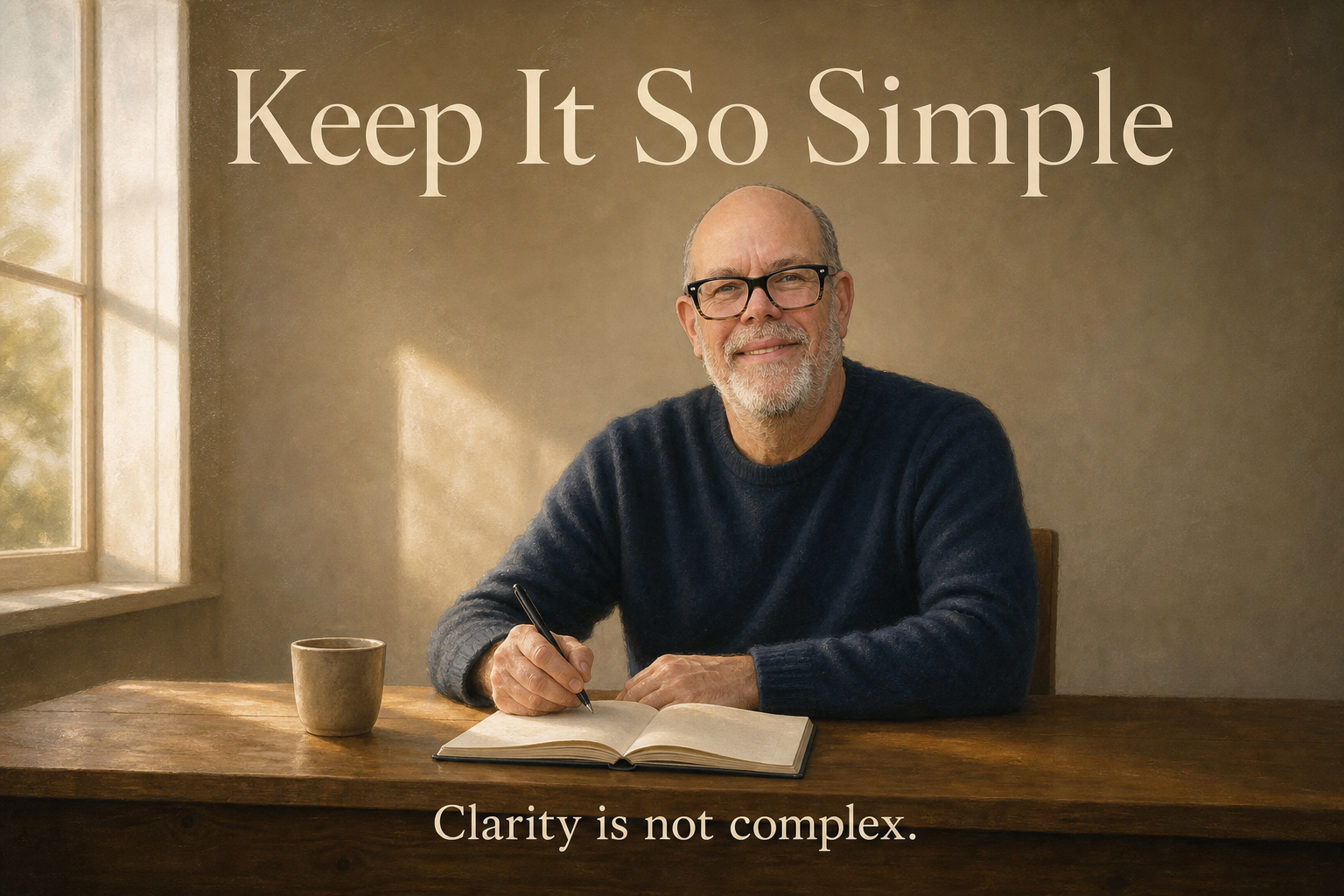
    “Clarity is not complex.”


    If this resonated, pull up a chair. I send one letter a month with new writing and honest updates on my novel, Paul’s Penance. Sign up at danhansen.com.