

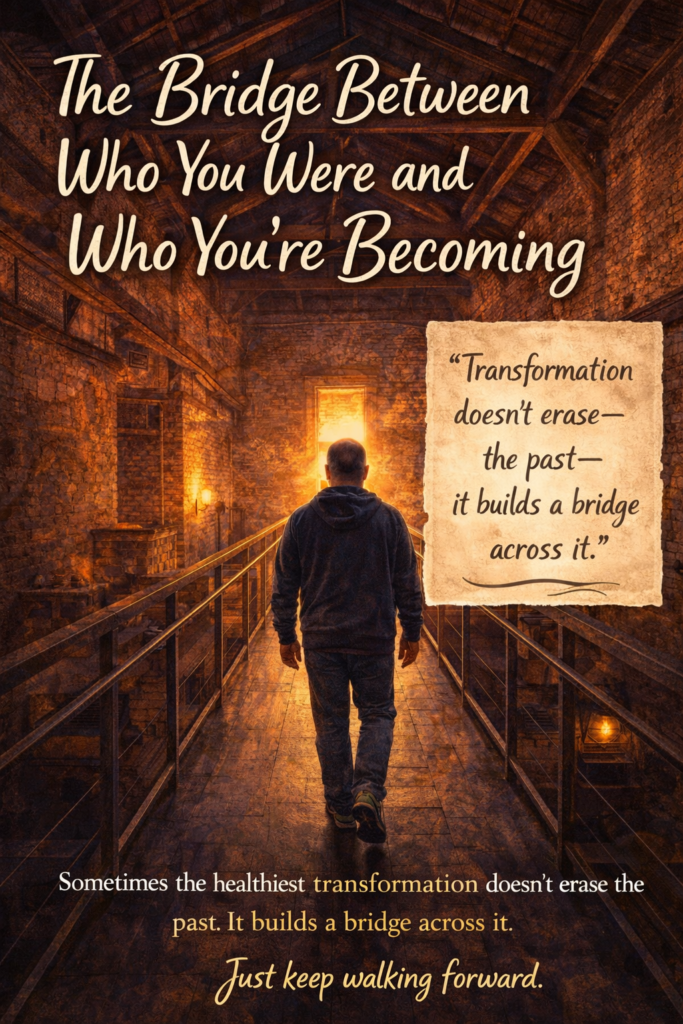
I recently came across a story about an old grain warehouse that had been transformed into a living space.
The building had once been filled with machinery and the constant motion of freight arriving by train. When the trains stopped coming, the warehouse sat empty for years.
Eventually an architect bought it.
Instead of erasing the past, he preserved it. The old brick walls stayed. The wooden beams remained exactly as they were.
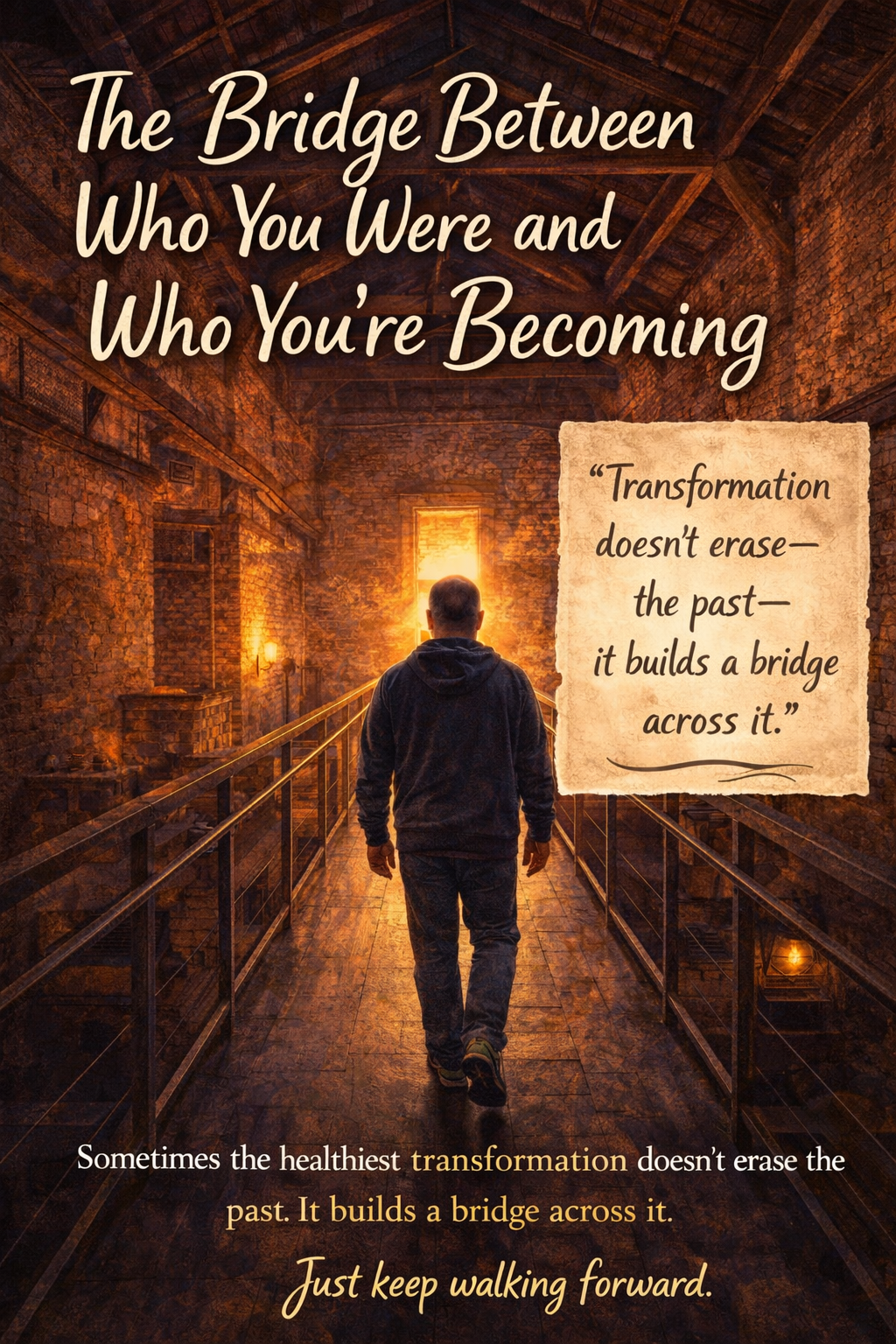
The only major addition was a narrow steel walkway stretching across the enormous open chamber.
A bridge.
It didn’t lead through rooms or hallways. It simply carried people across the empty space toward a doorway of light on the far side.
The architect explained that most renovations try to hide a building’s previous life. He wanted the opposite. He wanted visitors to walk through the memory of the structure before reaching whatever came next.
That idea struck me as a powerful metaphor for personal change.
When we move into a new phase of life, we often want to erase what came before—mistakes, disappointments, or periods of uncertainty.
But sometimes the healthiest transformation doesn’t erase the past.
It builds a bridge across it.
You walk through the memory of where you’ve been while moving toward what’s ahead.
The open space between those chapters can feel uncomfortable at first. We’re used to filling every moment with activity, certainty, or noise.
But emptiness isn’t always a problem.
Sometimes it’s exactly what allows us to see the whole structure of our lives clearly.
And once you see the structure, the next step becomes much easier.
Just keep walking across the bridge.
Alignment Before Outcome
Growth rarely happens by erasing the past.
Instead, it happens when you acknowledge where you’ve been and create a path forward that includes those experiences.
Your past is part of the structure that supports who you are becoming.
The goal isn’t to demolish it.
The goal is to build a bridge across it.
Quote
“Transformation doesn’t erase the past—it builds a bridge across it.”